
Last Updated: October 10, 2026
Learning how to safely store kettlebells and weight plates correctly protects your investment and keeps your home safe. Poor storage creates hazards.
How to safely store kettlebells and weight plates matters more than most people realize. A proper setup takes 30 minutes but saves years of frustration.
The right storage system transforms a cluttered corner into a functional space. You’ll use your equipment more often when it’s easy to access and properly maintained.
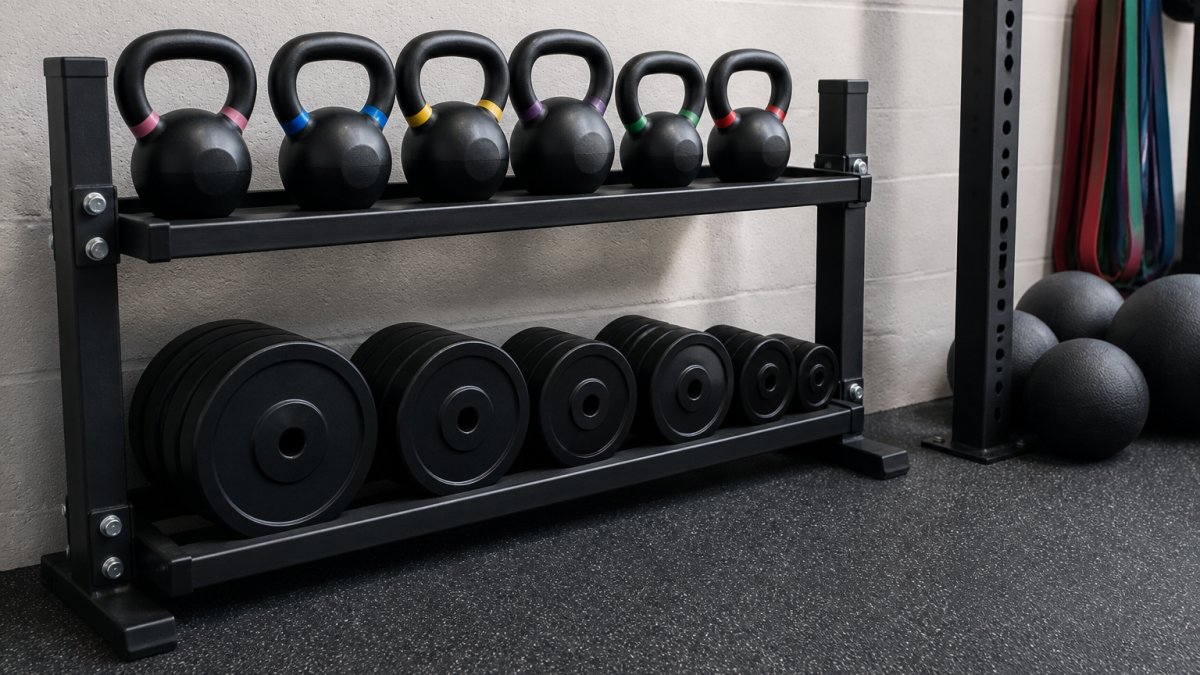
A kettlebell storage rack keeps your equipment organized and accessible. The best racks hold multiple kettlebells without taking up much floor space. Look for racks with individual slots so each kettlebell sits securely.
Consider these rack types:
Before buying, verify the rack’s weight capacity. Most quality racks safely hold 200-300 pounds total. However, capacity is not evenly distributed across all shelves.
Calculate your load: Add up the weight of kettlebells you plan to store on each shelf. If you own kettlebells in 25, 35, 50, and 70-pound sizes, the heaviest shelf could exceed per-shelf limits if you stack multiple weights on one level.
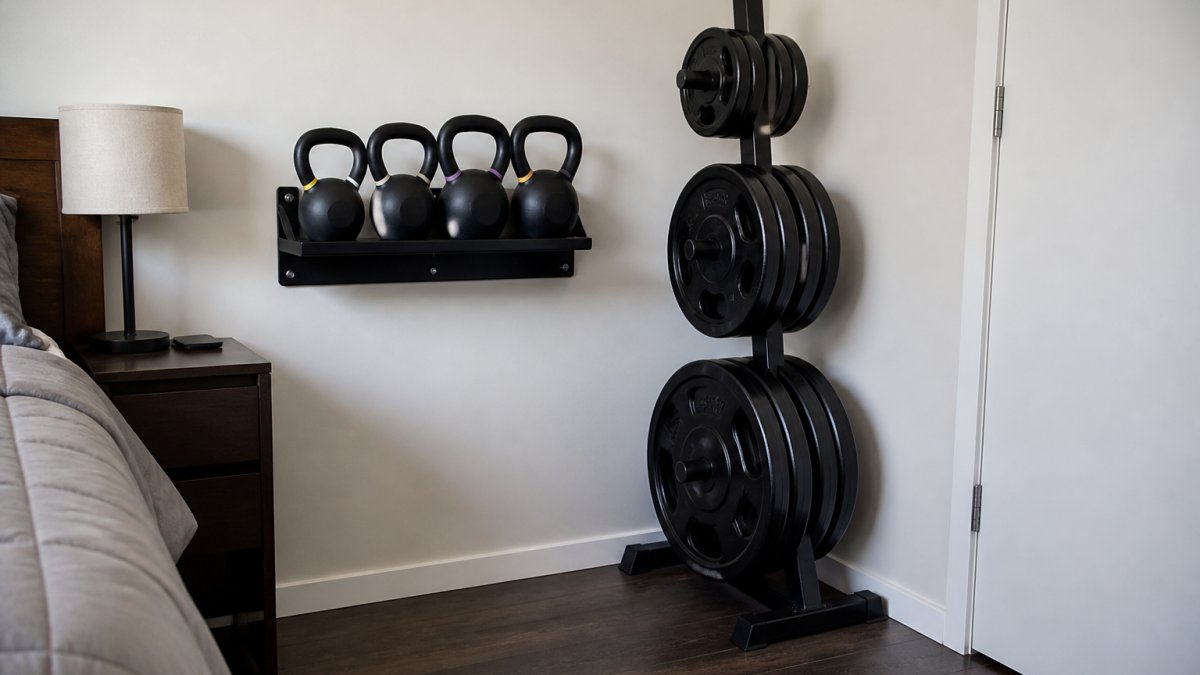
Wall-mounted racks must be anchored to wall studs, not drywall alone. Drywall anchors cannot support the dynamic load of kettlebells being removed and replaced during workouts. Locate studs using a stud finder (typically spaced 16 inches apart).
Use fasteners rated for your rack’s weight:
Drill pilot holes slightly smaller than your fastener diameter to prevent splitting studs. Install the rack level using a bubble level before tightening all fasteners fully. Uneven installation concentrates load on one corner and increases tipping risk.
Even floor-standing racks can tip if kettlebells are removed unevenly or if the base is unstable. Check stability before and after loading:
Look for powder-coated finishes that protect against moisture and corrosion.
A weight plate storage rack keeps plates organized and prevents damage to your floors. Plates stored directly on concrete or wood get damaged and damage the surfaces beneath them. Unlike kettlebells, weight plates require specific handling during storage to prevent bending and warping.
Before installing a rack, evaluate your floor’s load capacity. Weight plate racks loaded with 300-500 pounds concentrate force on a small footprint, which can damage floors or stress joists in upstairs rooms.
For garage floors: Concrete can support heavy racks, but check for cracks or soft spots. If concrete is damaged, the rack may settle unevenly, causing plates to slide or tip. Repair cracks before installation.
For upstairs rooms or basements: Residential floors are typically rated for 40 pounds per square foot of distributed weight. A 500-pound rack on a 2-square-foot footprint equals 250 pounds per square foot, well above safe limits. Distribute the load by:
Select a weight plate storage rack with these features:
Check the manufacturer’s weight capacity and per-shelf limits before loading. Place your rack on level ground to ensure stability. If your floor is uneven, use shims under the feet to level it, use a bubble level to verify.
Arrange plates strategically to maintain stability and protect equipment:
Position your weight plate storage rack near where you work out, but not in a walkway. Easy access means you’ll use your equipment more often, but blocking movement creates trip hazards.
Keep the rack away from moisture sources like windows, doors, bathrooms, and dehumidifiers. Even though dehumidifiers reduce humidity, they’re often placed in damp areas. Store your rack in the driest part of your gym space.
Sort your plates before loading the rack. Group them by weight: 2.5 pounds, 5 pounds, 10 pounds, 25 pounds, and so on.
Arrange heavier plates at the bottom of your rack. Lighter plates go on top. This keeps your center of gravity low and makes the rack more stable.
Use the slots designed for each plate size. Bumper plates need wider slots than metal plates. Standard competition plates (45 pounds) fit most racks, but verify before buying.
Moisture ruins plates fast. Store them in a dry area away from windows, doors, and bathrooms.
Wipe plates dry after workouts. Sweat contains salt that corrodes metal. A quick wipe takes 30 seconds and extends equipment life by years. Use a dry cloth or old towel.
Inspect plates monthly for rust spots. Light surface rust can be cleaned with a wire brush and light oil. Deep rust means the plate is damaged and unsafe to use.
Storing kettlebells outside is risky. Exposure to rain, sun, and temperature changes damages them quickly. Metal rusts. Paint peels. Handles become slippery when wet.
If you must store kettlebells outside, use these precautions:
Indoor storage is always better. The small space savings isn’t worth the equipment damage.
Before putting equipment away, perform these safety checks:
Damaged equipment causes injuries. A kettlebell with a cracked handle can break mid-swing. A wobbly rack can collapse. Replace anything that looks unsafe.
Check your rack’s bolts and anchors monthly. Vibration from workouts can loosen fasteners over time. Tighten everything before it becomes dangerous.
Small apartments need creative storage. Vertical racks save floor space. Wall-mounted kettlebell racks take just 12 inches of wall width but hold 5-8 kettlebells.
Use these strategies for limited space:
In shared homes with kids or pets, safety matters most. Store heavier kettlebells where children can’t access them. Use locked storage boxes if needed. Keep equipment away from play areas.
Many people damage their equipment through careless storage. Learn from these common mistakes:
Stacking plates without protection, Plates scratch and dent when stacked loosely. Always use a rack with individual slots.
Storing on concrete floors, Concrete is porous and holds moisture.
Ignoring humidity, Moisture causes rust even in cool rooms.
Overloading racks, Racks have weight limits for a reason. Exceeding capacity causes collapse and injury.
Mixing wet equipment with storage, Never put sweaty kettlebells directly into storage. Wipe them dry first.
Blocking access paths, Equipment stored in walkways gets knocked over and causes trips.
Skipping maintenance checks, Monthly inspections catch rust and damage early.
Store kettlebells and weight plates on a dedicated rack designed for their weight capacity. Keep them off the floor to prevent trip hazards and protect flooring. Ensure racks are anchored securely to wall studs if wall-mounted, or positioned on a stable, level surface if floor-standing. Organize equipment by weight and type for easy access. Check rack stability monthly and inspect equipment for damage before storage.
A dedicated weight plate storage rack is highly recommended but not absolutely required. However, racks provide several key benefits: they keep plates organized and easily accessible, protect your flooring from damage, prevent plates from rolling, and make your space safer by eliminating trip hazards. If you don’t use a rack, stack plates vertically on a barbell or use a plate tree, but ensure the surface is stable and level.
Kettlebells can be stored outside temporarily, but long-term outdoor storage is not ideal. Exposure to moisture, temperature fluctuations, and UV light can cause rust and degradation. If you must store kettlebells outside, use a weatherproof cover, ensure the storage area is well-ventilated, and inspect them regularly for rust. Indoor storage in a dry, climate-controlled space is always the better choice for protecting your equipment’s lifespan and safety.
Weight capacity varies by rack type and manufacturer. Always check the manufacturer’s specifications before purchase and never exceed the stated weight limit. Overloading a rack can cause it to tip, collapse, or damage your flooring, creating serious safety risks.
Proper storage keeps your equipment safe, organized, and ready for workouts. Today’s Wellness Zone offers high-quality kettlebells and weight plates designed to last years with proper care. Our equipment comes with vendor warranties and a 30-day return policy, so you can build your home gym with confidence. Start shopping today and create a fitness space that works for you.
