
Last Updated: October 17, 2026
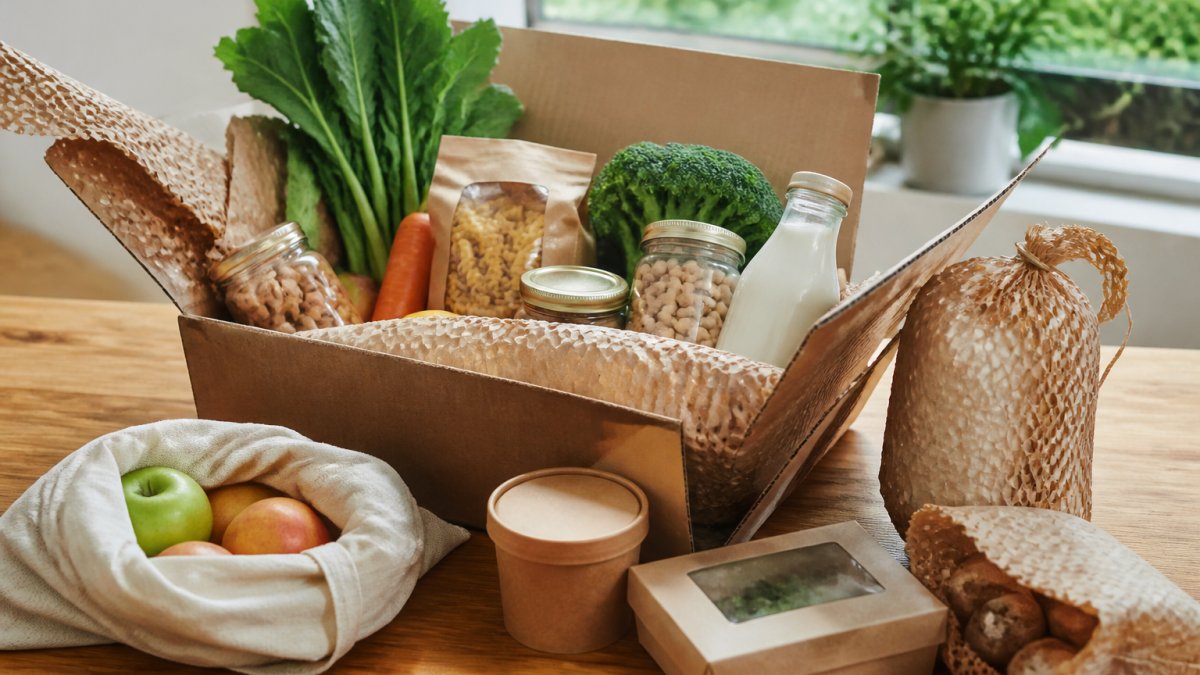
Eco friendly packaging for online groceries is packaging that protects food, survives delivery, and can be reused, recycled, or composted after use. At Today’s Wellness Zone, we ship wellness gear and supplements to doorsteps every day.
Online grocery shopping keeps growing, and customers notice waste. A common mistake is treating sustainability as a marketing label. In practice, it is an engineering problem.
Below, we break down the materials, the cold-chain rules, and a workflow you can run from day one.
Paper and cardboard win for dry goods. Kraft paper, corrugated cardboard boxes, paper wrap, and water-activated tape are recyclable in most curbside programs. They also cushion well and cost less than many plastic alternatives.
Compostable bags and food pouches suit some items, but check the label first. Many “compostable” films only break down in commercial composting facilities, not a backyard bin. Biodegradable is a looser term with no fixed timeline, so treat it with caution.
What to avoid:
Recyclable food packaging only helps if your customers can actually recycle it. Curbside rules vary by city and by hauler. Greasy pizza boxes often get rejected. Small items fall through sorting screens. So the best recyclable choices are simple, clean, and large enough to sort.
Our picks for grocery orders:
Rinse and dry any container that held food. Keep paper separate from plastic film. Label clearly on the outside so customers know what to do.
Compostable food packaging helps when you have a clear end-of-life path. It works best for food scraps, produce trays, and items that will be composted at a commercial facility. Check the US Composting Council’s guidance on compostable products before you switch a whole product line.
It does not help when:
Look for clear certification labels. Vague “eco” claims mean little. If a supplier cannot tell you where the item breaks down, ask why.
Reusable packaging for online groceries only works when the return loop is easier than throwing the container away. Most programs that fail do so for one of three reasons: the deposit is too low to motivate returns, the drop-off is inconvenient, or the cleaning step is not documented well enough to satisfy food-safety inspectors. The programs that succeed treat the container as an asset with a lifecycle, not as a giveaway.
**1.
2. Collection and reverse logistics. The cheapest collection point is the next delivery.
3. Cleaning and food-safety documentation. Reusable containers that touch food must be washed and sanitized between uses, and the wash step must be documented.
4. Inspection and retirement. Build a quick inspection into the wash line: check for cracks, missing gaskets, lingering odors, and label legibility.
Reusable packaging is not automatically cheaper. The break-even depends on cycle count, wash cost, loss rate, and reverse-logistics cost per container. Build a simple model: replacement cost divided by expected cycles gives you a cost per use; add wash cost and reverse-logistics cost per cycle; compare that to the cost of the single-use packaging it replaces. If the reusable cost per use is higher, the program may still be worth running for customer-loyalty or brand reasons, but know that going in rather than discovering it after launch.
Cold-chain performance decides whether eco packaging survives real grocery orders. Refrigerated and frozen items need insulation, and paper alone rarely holds temperature long enough. The practical fix is a hybrid: recyclable cardboard outside, a reusable cold pack or recyclable liner inside.
What works:
Food-safe packaging must keep raw meat and ready-to-eat items apart. Use separate sealed bags and label them clearly. Test every pack in summer heat and winter cold before you scale it.
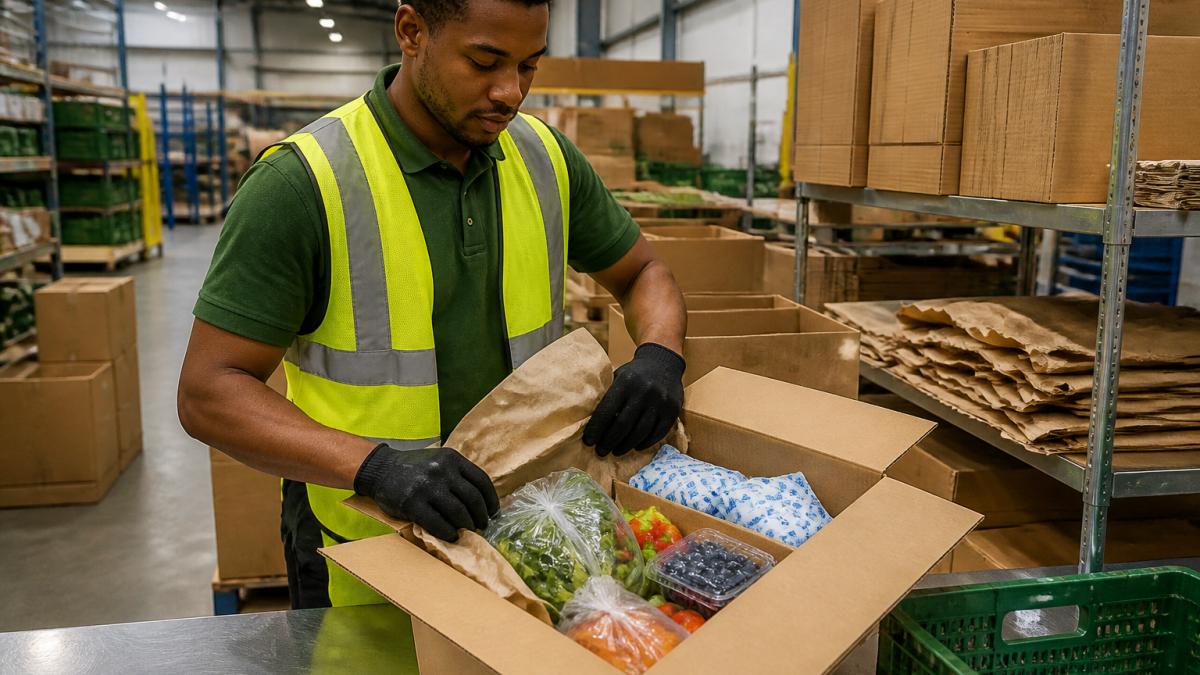
A packaging workflow is the step-by-step process from order to doorstep. The version below is written for an online grocery operation that wants to cut waste without cutting cold-chain performance.
| Step | What You Do | Why It Matters |
|---|---|---|
| Sort | Group by temperature | Stops cross-contamination |
| Right-size | Pick the smallest standard box | Cuts void fill, weight, and shipping cost |
| Cushion | Use paper or molded fiber | Protects food and recycles easily |
| Seal | Apply paper tape | Keeps the box recyclable |
| Chill | Surround perishables with cold packs | Protects temperature-sensitive food |
| Label | Print disposal notes | Reduces recycling contamination |
Packaging cost per order is not just the price of the box. Track these line items together:
A small change in box-size mix often moves cost per order more than a switch in cushioning material. Review the mix monthly.
Ask every supplier the same questions and keep the answers on file:
Suppliers who cannot answer the disposal question clearly are usually selling a marketing claim rather than a material.
Paper and molded fiber need dry storage; damp corrugated loses strength and can grow mold. Cold packs need freezer space and a rotation plan so you are not thawing and refreezing them. Reusable containers need a wash-and-inspect area separate from packing. Plan the footprint before you scale, storage is a common bottleneck that shows up only after volume grows.
There is no single best option. The most eco-friendly choice depends on your local disposal infrastructure. Recyclable cardboard and paper are widely accepted in curbside programs, while compostable packaging needs commercial composting to break down properly. Reusable containers have the lowest lifecycle impact when they are returned and reused multiple times. Focus on right-sizing and using materials your customers can actually recycle or compost at home.
Not automatically. Compostable packaging only breaks down in commercial composting facilities, which most households cannot access. If it ends up in a landfill, it behaves like regular plastic. Recyclable packaging, especially cardboard and paper, is more widely accepted in curbside programs. Choose compostable options only if your area has collection or drop-off for compostable materials, and always label disposal instructions clearly.
Start by right-sizing boxes to avoid excess void fill. Swap plastic tape for water-activated paper tape and plastic bags for paper mailers. Offer reusable totes or containers with a deposit-return system. Use compostable bags only for items that will be composted. Work with suppliers to reduce incoming packaging, and give customers clear disposal instructions on every order.
Check the label or the retailer’s website for specific instructions. Many insulated liners are made of recycled materials and can be recycled at store drop-off locations, while some are compostable. Gel packs can often be reused or drained and discarded. Never put insulated packaging in curbside recycling unless it is explicitly accepted. When in doubt, contact the retailer for disposal guidance.
Eco-friendly grocery packaging takes planning, but the payoff is real. Today’s Wellness Zone makes that easier for wellness shoppers with 100% original products, vendor warranties, a 30-day return policy, and secure checkout. Start shopping with Today’s Wellness Zone and get your order delivered safely to your door.
