
Last Updated: October 3, 2026
High quality energy supplements contain carefully selected ingredients backed by research, transparent labeling, and third-party verification. At Today’s Wellness Zone, we focus on helping you identify supplements that deliver real results without hidden fillers or questionable additives.
Here’s what separates a truly high quality energy supplement from the rest:
The right supplement can help with afternoon slumps or focus issues, but choosing wisely means knowing what to look for before you buy.
Third-party testing is your strongest guarantee that a supplement actually contains what the label claims. An independent lab tests the product to verify ingredient identity, purity, and potency.
A manufacturer could claim 200mg of a key ingredient when the bottle contains only 50mg, third-party testing catches these gaps because the independent lab has no financial stake in the product’s success.
Look for these certification seals on supplement labels:
These seals mean an independent organization tested the product, not just the manufacturer.
Labs verify ingredient identity, measure whether amounts match the label, and screen for contaminants like heavy metals, bacteria, or pesticides. Without testing, you’re taking the manufacturer’s word; with it, you have proof.
Learning to read supplement labels tells you exactly what you’re getting and in what amounts.
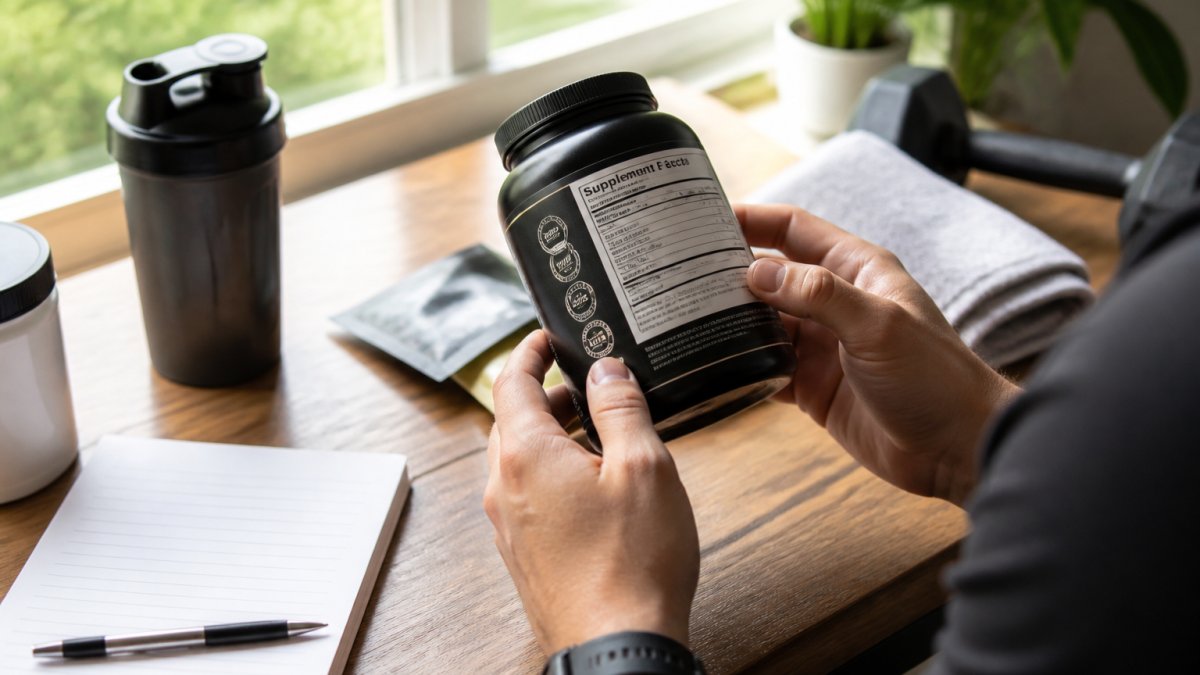
Find the Supplement Facts panel, which shows active ingredients and amounts in milligrams or micrograms (unlike food labels, which use daily calorie percentages).
Core ingredients include caffeine (100-200mg typical dose), B vitamins, adaptogens like rhodiola, and amino acids. Choose based on your caffeine sensitivity and needs.
If a supplement lists “proprietary blend” instead of individual amounts, that’s a red flag, you can’t verify potency. Reputable manufacturers list every ingredient with its exact dose.
Your body excretes excess B vitamins, so 100%+ daily value is safe. Caffeine has no official daily value, so labels won’t show a percentage.
Check serving size, some list two capsules per serving, others one. Dosage should match research: caffeine studies use 100-200mg per dose, so 30mg won’t be effective.
The FDA regulates supplements differently than drugs. This matters because it affects what claims manufacturers can make and how strictly products are monitored.
Under DSHEA, supplements don’t need FDA approval before sale. The FDA doesn’t pre-test supplements like medications, so you must verify quality independently.
The FDA requires accurate labeling, truthful claims, proper manufacturing standards, and adverse event reporting.
Manufacturers cannot claim a supplement “cures” or “treats” disease, only that it “supports” or “promotes” functions.
For more details on how supplements are regulated, the FDA’s official guidance on dietary supplements explains the legal framework and what manufacturers must follow.
The manufacturer matters as much as the formula. A reputable company invests in quality control, testing, and transparency. A questionable manufacturer cuts corners, sources ingredients from unverified suppliers, and makes claims they can’t substantiate.
Start by researching the company directly. Legitimate manufacturers provide clear, verifiable information:
Physical location and contact information: Verify a real physical address (not P.O. box) and working phone number. If a company won’t disclose manufacturing location, that’s a red flag.
Good Manufacturing Practice (GMP) certification: Third-party GMP certification from NSF International or the Natural Products Association means an independent auditor verified FDA compliance. Look for “GMP Certified” or “NSF GMP Certified.”
Company history and transparency: Established manufacturers protect their reputation. Check for founder information, ingredient sourcing, published certificates of analysis, and responsive customer service.
Third-party testing and certificates of analysis: Reputable manufacturers publish certificates of analysis (CoA). If a manufacturer refuses to share results, they likely haven’t done rigorous testing.
Certification seals prove an independent lab tested the batch and confirmed label accuracy. However, not all seals carry equal weight.
NSF Certified for Sport: Tests for identity, strength, purity, and banned substances; tests every batch. Rigorous and valuable for athletes.
USP Verified: Confirms ingredients match label potency, are free from contaminants, and were made safely. Highly respected.
ConsumerLab Approved: Independent testing with published results.
Informed Choice Certified: Screens for banned substances; valuable for athletes but less comprehensive than NSF or USP.
Third-party testing from private labs: Some manufacturers use private labs (not NSF, USP, or ConsumerLab). Ask which lab tested the product and request the full report. Reputable labs include Eurofins, Intertek, and Microbac.
Avoid supplements with these warning signs:
Where you buy matters because counterfeit supplements are common on unregulated marketplaces. Purchase from:
Avoid:
Reputable manufacturers stand behind their products with warranties and return policies. Today’s Wellness Zone carries only 100% original supplements backed by vendor warranties. Our 30-day return policy gives you confidence that if a supplement doesn’t work for you, returns are simple and hassle-free. This guarantee is only possible because we verify authenticity and quality at every step.
How you store a supplement and which form you choose directly affect whether you actually absorb and use the active ingredients. These factors separate a supplement that works from one that sits inert in your digestive system.
Supplements degrade predictably when exposed to heat, light, moisture, and oxygen. Understanding these degradation pathways helps you maintain potency from purchase through the last dose.
Temperature sensitivity: Most supplements remain stable at room temperature (59-77°F). Avoid warm, humid bathroom cabinets; store in cool kitchen cabinets or bedroom closets.
Light exposure: UV light degrades B vitamins and herbal extracts. Store in original opaque or amber packaging and fill organizers weekly, not monthly.
Moisture control: Keep bottles tightly sealed and don’t discard silica gel packets. Avoid damp basements and kitchen sinks.
Oxygen exposure: Powders oxidize faster than capsules or tablets. Use opened powder supplements within 3-6 months.
Expiration dates guarantee at least 90% potency under proper storage. B vitamins remain stable 2-3 years; vitamin C loses 50% within 1-2 years in powder form; caffeine is extremely stable. Check expiration dates before purchase.
Bioavailability is the percentage of an ingredient your body actually absorbs and uses.
Synthetic vs. natural forms: Form significantly affects bioavailability. Magnesium citrate, malate, and glycinate absorb at 25-30%; oxide absorbs only 4-5%. Iron ferrous forms absorb better than ferric forms.
Standardized extracts: Herbal supplements vary wildly in potency because plants contain different concentrations of active compounds depending on growing conditions, harvest timing, and storage.
Chelation and binding: Minerals bound to amino acids (chelated minerals) absorb better than mineral salts. Magnesium glycinate absorbs better than magnesium oxide.
Delivery form and absorption rate:
Most people make at least one mistake when choosing an energy supplement.
Mistake 3: Ignoring caffeine sensitivity. High-caffeine supplements cause anxiety and sleep disruption. Consider caffeine-free adaptogens instead.
Mistake 4: Buying without checking ingredients. Verify doses are meaningful.
Mistake 5: Switching brands constantly. Most supplements take 2-4 weeks to show effects.
Mistake 6: Skipping third-party testing. Always verify a certification seal.
Mistake 7: Not considering interactions. Ask your doctor before adding supplements if you take prescription drugs.
| Common Mistake | Why It Happens | Better Approach |
|---|---|---|
| Choosing by price alone | Budget constraints | Compare price per serving, not bottle price |
| Ignoring caffeine content | Don’t read labels | Check mg of caffeine; start low if sensitive |
| No third-party testing check | Don’t know what to look for | Always verify NSF, USP, or ConsumerLab seal |
| Switching products frequently | Impatience with results | Give each supplement 4 weeks minimum |
| Buying from unknown sellers | Convenience or lowest price | Purchase from established retailers only |
| Assuming all B vitamins are equal | Think all brands are the same | Choose standardized, tested formulations |
Choosing high quality energy supplements doesn’t have to be complicated.
At Today’s Wellness Zone, we’ve curated a selection of energy supplements that meet these standards.
Look for third-party testing seals from organizations like NSF International, USP (United States Pharmacopeia), or ConsumerLab. These certifications verify that the supplement contains the ingredients listed on the label in the stated amounts and is free from harmful contaminants. The FDA does not pre-approve supplements, so third-party certification is your best assurance of quality and safety.
Check the supplement facts label for ingredient lists, daily value percentages, and standardized extract information. Visit the manufacturer’s website to confirm third-party testing results. Look for certificates of analysis that document heavy metal testing and microbial contamination screening. Reputable brands publish these results openly, while lower-quality manufacturers often hide this information.
The FDA regulates supplements under the Dietary Supplement Health and Education Act (DSHEA), which means manufacturers are responsible for ensuring safety and accuracy of labels before products reach consumers. However, the FDA does not pre-approve supplements like it does medications. This places the responsibility on you to verify quality through third-party testing, manufacturer reputation, and certification seals.
Avoid supplements with excessive caffeine (over 400mg daily) unless you have high caffeine tolerance, as this can cause jitteriness and sleep disruption. Be cautious with proprietary blends that don’t disclose individual ingredient amounts. Check for synthetic additives, artificial dyes, and unnecessary fillers. If you take other medications or stimulants, consult a healthcare provider about potential interactions with common energy ingredients like B-vitamins, adaptogens, and herbal extracts.
